Maintain control of Hormuz, Leader insists in meeting with security chief
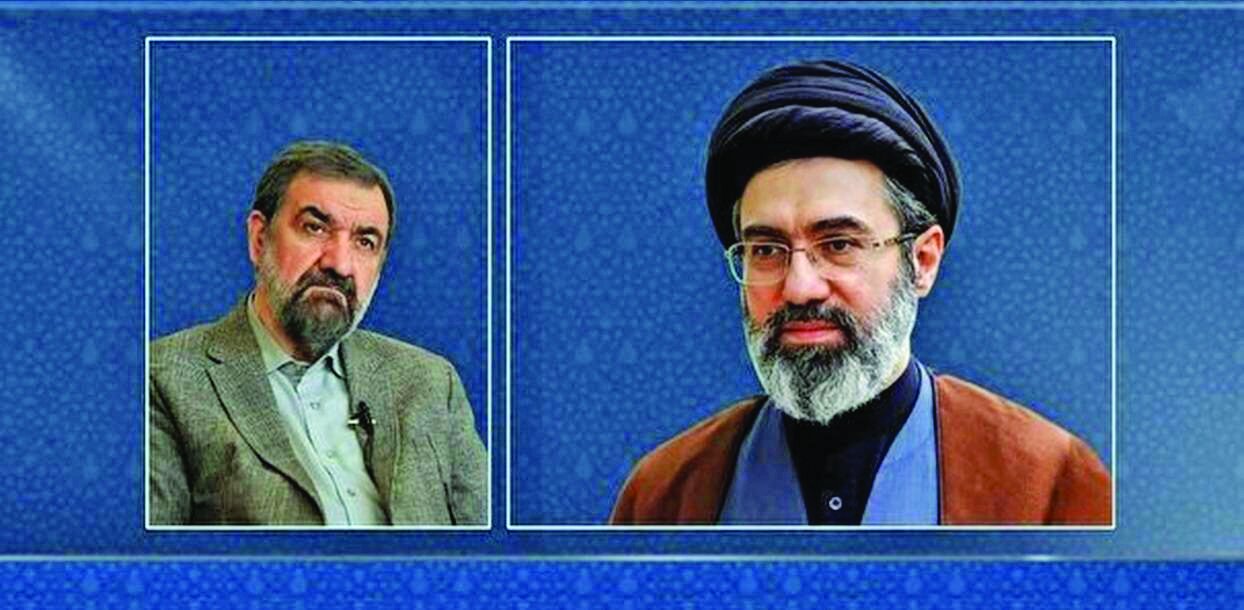
TEHRAN — Leader of the Islamic Revolution Ayatollah Seyyed Mojtaba Khamenei met with Major General Mohsen Rezaei, Secretary of the Supreme National Security Council (SNSC), for a review of the country’s situation across culture, politics, economy and security, and the region’s shifting order.
During the meeting, the Leader described the SNSC and its Secretariat as the “crossroads of policymaking” in the country’s affairs, stressing that culture, politics, economy and security are interconnected and that decisions in each field must be accompanied by appropriate supporting measures.
He said sound and well-grounded decisions require a roadmap based on a comprehensive understanding of each undertaking, from its starting point to its conclusion.
Unity, trust and constitutional capacities
Other key topics discussed included strengthening national cohesion and unity, as well as mutual trust between the people and officials.
The Leader underlined the need to make use of the capacities provided by the Constitution, particularly Article 176, to assist the President and executive bodies in facilitating and expediting the resolution of the country’s problems.
He described the enemy’s desperation as one of the fruits of national resistance, while emphasizing the need for proactive and timely communication to sustain the people’s continued participation in defending the country and the Islamic establishment.
The Leader also stressed the need to pursue the rights and interests of the Iranian nation and the Resistance Front by ensuring that the conditions set forth by the country’s officials for ending the war are met, and by bringing the current state of “neither war nor peace” to an end.
Safeguarding national and regional security by maintaining control over the Strait of Hormuz, and strengthening bilateral relations with neighboring countries on the basis of lasting and mutual interests, were among other points raised by the Leader.
For his part, Rezaei presented a report on the country’s situation in various sectors and ongoing efforts. He identified the pursuit of the Islamic Republic’s strategic policy of “establishing endogenous regional arrangements and order” as one of the initiatives currently being undertaken by the Secretariat of the SNSC.
From directive to action: quadrilateral in Tehran
Rezaei’s remarks after Monday’s quadrilateral meeting in Tehran — which brought together senior officials from Iran, Pakistan, Turkey and Saudi Arabia on regional security and stability — illustrated that policy in practice.
Speaking after the talks hosted by Iran, the SNSC secretary called for a regional security framework built by West Asian countries themselves and free from foreign interference, saying the meeting demonstrated that U.S. threats had failed to deter regional states from pursuing closer ties.
“Following the resistance of the Iranian nation and the strength of our Armed Forces, a new and positive atmosphere has emerged in the region and in our discussions with senior officials from Turkey, Pakistan and Saudi Arabia,” Rezaei said, adding that regional cooperation should have begun much earlier.
He said the results of Iran’s resistance were becoming increasingly evident and that the participating countries shared the view that regional challenges could best be addressed through cooperation among all four nations.
The discussions, he said, had led to a clear conclusion: security in West Asia must be generated from within the region, and foreign intervention must be prevented.
In a post on X, Rezaei reinforced that position, arguing that the United States had failed to bring security to any country in the region and that Washington’s inability to provide security guarantees had become apparent.
“Security in West Asia must originate from within the region itself, and any foreign intervention must be prevented,” he wrote.
Ghalibaf recounts Leader’s outlook on economy and war
In a related account, Parliament Speaker Mohammad Bagher Ghalibaf on Tuesday gave MPs details of his own recent meeting with Ayatollah Khamenei, saying he found the Leader in full health, with strong spirit, hope, firmness, inner calm and full command of issues.
Despite the heavy personal losses he has suffered, this spirit reflects profound faith in God and deep trust in the people, Ghalibaf told the open session of Parliament in his pre-agenda remarks.
According to Ghalibaf, the Leader closely followed macroeconomic indicators and stressed that they must be assessed precisely, with neither overestimation nor underestimation.
Another major topic, raised by the Leader for the third time during the war, was securing production chains — from raw materials and production cycles to the supply of basic goods — Ghalibaf said.
Preserving people’s purchasing power and livelihoods, especially those of the Armed Forces and fighters on the frontlines who must remain the priority, was another point of emphasis, he added.
Ghalibaf said military issues, the war and the Resistance Front, as well as diplomacy, negotiations, and in particular the economic war, economic exclusion and the naval blockade, were discussed, with reports presented and reviewed.
The Leader, he said, also stressed service to the people particularly in the area of resilience, maximum unity among officials, adoption of firm and unified positions — especially at the level of branch heads — the latest state of relations with strategic partners, especially China, on which he regularly follows up, and cooperation between the government and Parliament.
Leave a Comment